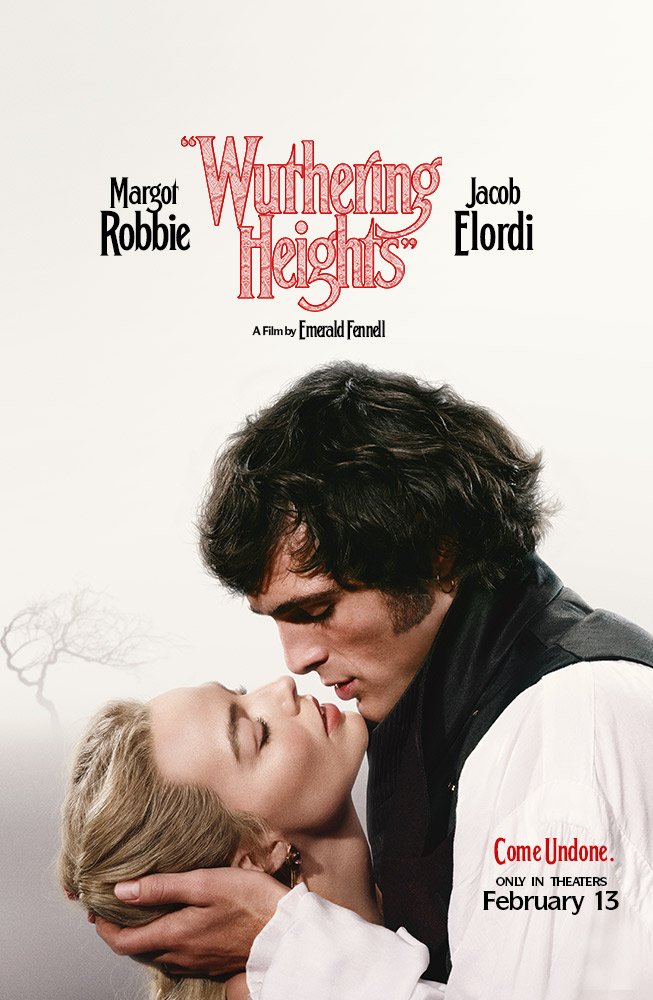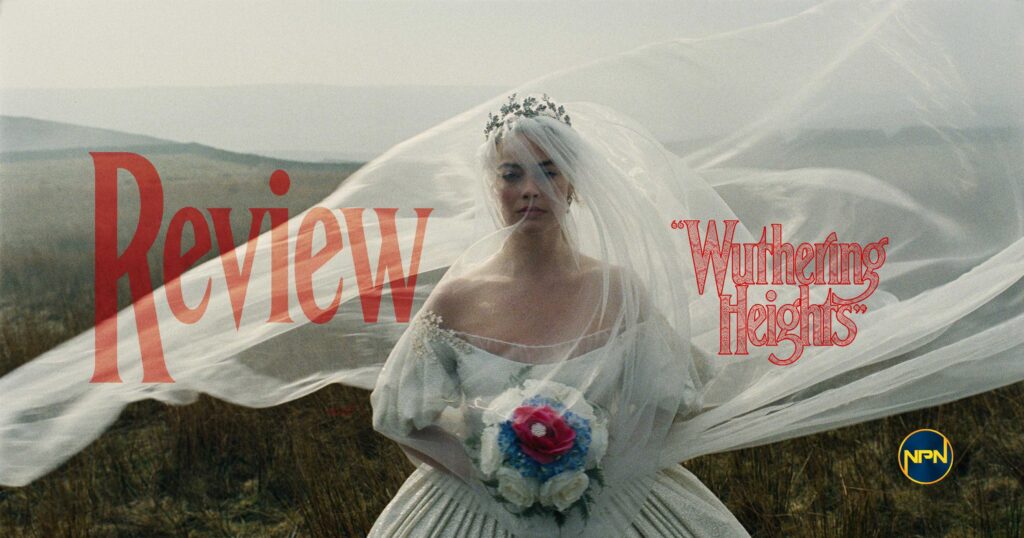
Back in 2020, Emerald Fennell released her first movie, Promising Young Woman, which had a very divisive third act. This wasn’t going to be the last of Fennell’s controversy, as she dropped Saltburn in 2023, which I was a major fan of, but its context and some scenes led people to have discussions that are still going on today. People have been asking for more period dramas, and Emerald Fennell got people excited when another Wuthering Heights adaptation helmed by her was announced. However, after castings were announced and trailers were shown, some people weren’t too sure if this was exactly what was wanted from a brand-new Wuthering Heights.
Let’s discuss the elephant in the room. It’s hard to avoid the chatter online surrounding Wuthering Heights when it comes to Jacob Elordi’s casting as Heathcliff, but I wanted to get this out in the air: I’ve not engaged with Emily Brontë’s original book, and I’ve also not viewed any of the other previous adaptations of Wuthering Heights. This is my first time engaging with the story, and this review is going to be discussing Emerald Fennell’s adaptation exactly for what it is as a movie. I’m a Black man in his 20s, and I’ve accepted that Emerald Fennell will never be able to make a movie that’s targeted towards me, but I was still able to come out of Wuthering Heights with some enjoyment despite its blatant issues.
Emerald Fennell’s Wuthering Heights takes place in 1770s England and follows Heathcliff (Jacob Elordi), who is taken into the Earnshaw family and falls deeply in love with Catherine Earnshaw, but unfortunately finds himself in a position where he must change himself to earn the love of a woman of such high social standing compared to him.
It has been proven with Emerald Fennell’s previous films that she hasn’t got the best understanding of social or racial context when it comes to her films, and specifically her writing. There’s a world where Wuthering Heights was a closer adaptation to the book, and I’ve got a strong feeling that if it were, the conversation surrounding this movie currently would be much worse than it already is, and I’m thankful that Fennell has created an adaptation that’s loose for fidelity purposes. It would’ve been much better if she had advertised this as an original movie that just happens to have slight Wuthering Heights inspirations sprinkled throughout, but unfortunately that’s not the film that we’ve received.
Fennell and a lot of the marketing around this movie have highlighted how freaky and overtly sexual it is, and you can tell by its opening scene as you begin to hear the moaning and grunting of a man supposedly simulating sexual intercourse, before it’s revealed that he’s actually being hung and has an erection for the crowd to see. It immediately sets you up for exactly what this film has to offer, and if that scene throws you off, then it’s safe to say that you’re likely to dislike the rest of the movie.
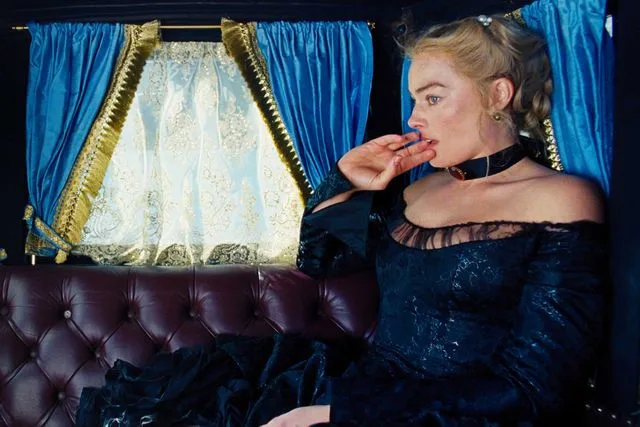
The opening minutes of this movie might be its best as we follow a young Heathcliff, portrayed by Emmy Award-winning Owen Cooper, and a young Cathy, who is played by Charlotte Mellington. Owen Cooper time and time again proves that he’s a young actor with range, while Charlotte Mellington portrays the character of Cathy better than Margot for half of the movie. Their chemistry together is great, and it helps give a better understanding of the two characters and their relationship.
When comparing Charlotte’s performance as Cathy to Margot’s, I’m not in any way saying that Margot Robbie didn’t give a good performance because that would be an outright lie. She did, but it felt like it took at least until some point during the movie’s second act for Robbie to really fit into the character. Overall, the main issue with Margot Robbie as Cathy is that she just feels like she’s been miscast in the role, and it’s largely her chemistry with Jacob Elordi that saves the performance.
On the topic of Elordi himself, his portrayal of the Heathcliff that’s intended for this adaptation was magnificent, and I was finding myself enjoying the film more anytime he was on screen. He’s a complex character that comes from nothing and reaches for the blue skies so that he can get the girl of his dreams, but it turns him into this nightmarish, abusive man who’s nothing like the kid we first see at the start of the film.
A lot of the plot for Wuthering Heights derives from miscommunication and betrayal, and that was the part that captured me most about its story. It’s such a simple dilemma that’s been overcomplicated into a huge mess that can’t be rectified. There’s a reference to Romeo & Juliet in the film by Isabella Linton (Allison Oliver), and it was from that moment onwards that you could feel the similarities between Romeo & Juliet and Wuthering Heights. It’s hard to say from an outside perspective if that was intentional and from the original source material, but it’s hard to avoid the similarities once you notice them.
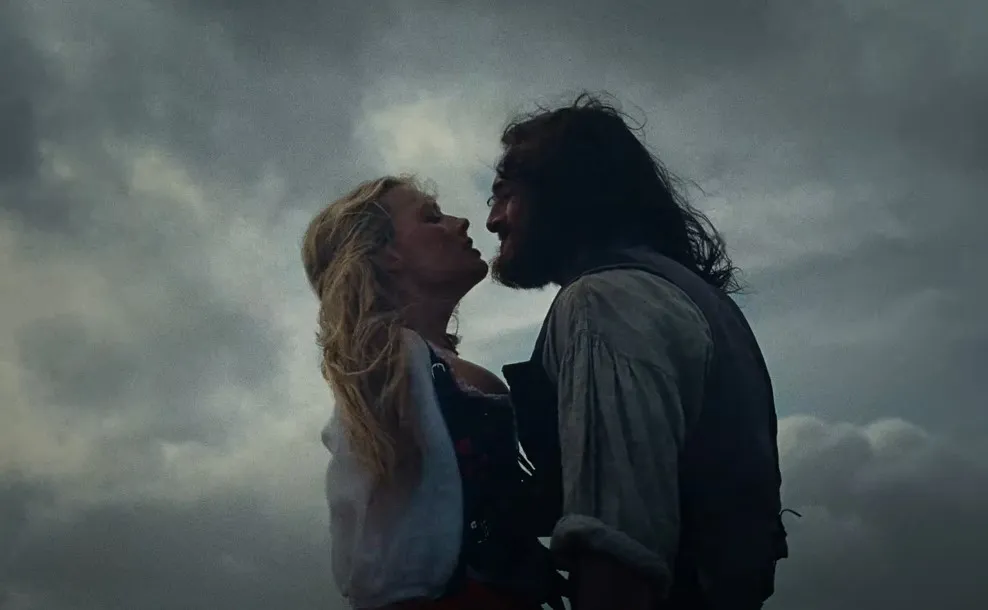
Jacob Elordi and Margot Robbie are the leads of this production, but the star of the show is Allison Oliver. While watching the movie, I failed to recognise that she also appeared in Saltburn. She’s not only playing a character that’s drastically different, but also the shift in tone with the character from this innocent, educated and harmless young woman to a character that has her vulnerabilities exposed and abused. Oliver brings so much to the role that I only wish the writing was better and we got more from her, because unfortunately the shift from the second act to the third act ultimately feels rushed and leaves the ending feeling like it lacks a satisfying conclusion.
Wuthering Heights has its issues here and there, which will be dependent on each viewer, but what can’t be denied is the work that’s gone into it outside of Fennell’s direction and screenplay. Jacqueline Duran crafts extravagant costumes that fit Suzie Davies’ transformative production design that brings you into this alternate, unique 1770s England, paired with Linus Sandgren’s cinematography, which adds to the toxic energy of Wuthering Heights and delivers an addictive and delicious display of visuals that you can’t look away from. The clear standout comes from Anthony Willis’ score and Charli XCX’s soundtrack, which enhances the entire viewing experience as Charli showcases an understanding of Wuthering Heights and delivers a layer with her album that can’t be found within just the screenplay alone.
Wuthering Heights isn’t the period drama that we all wanted back on our big screens, but truthfully it isn’t far off from one that I’d love to see. Emerald Fennell works with many talented people behind the scenes to help the movie be one of the best films we might get visually this year, especially for a movie of its kind. It’s safe to say that she should easily team up again with everyone involved, but maybe next time just make an original movie to save herself the controversy.